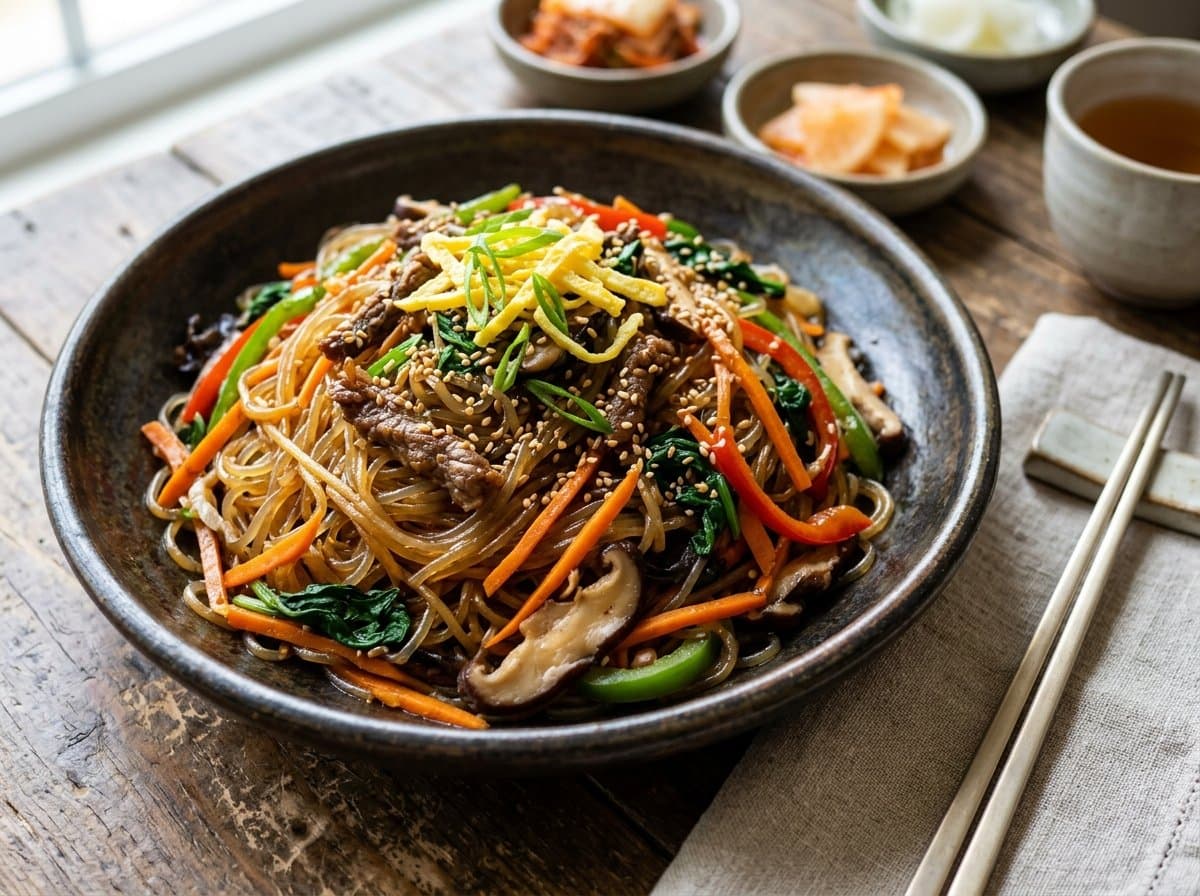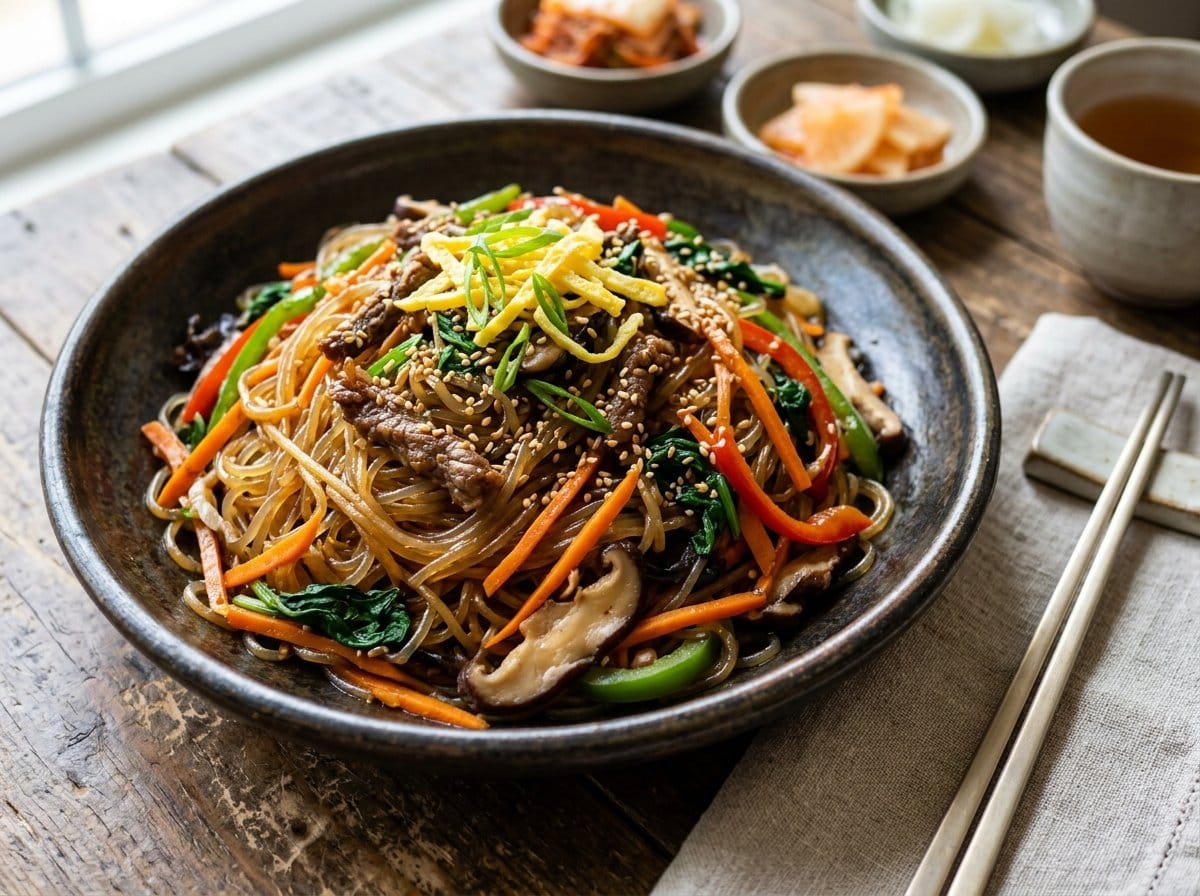
Korean Japchae with Beef
Korean glass noodles tossed with tender beef, spinach, mushrooms, and colorful vegetables in a savory sesame-soy sauce for a festive meal.
By TastyTrails Kitchen · Published · Updated
Jump to RecipeJapchae is a Korean noodle dish made with chewy sweet-potato starch noodles, sautéed vegetables, thinly sliced beef, and a lightly sweet soy-based seasoning. It is traditionally served at celebrations, but it also makes a satisfying weeknight dinner when prepared in batches.
This version follows the classic method of cooking each ingredient separately so the vegetables stay distinct and the noodles absorb the sauce without becoming watery. Slice everything before you begin, and toss the warm noodles with the sauce while they are still flexible for the best texture.
Ingredients
- 8 ounces (225 g) beef sirloin, thinly sliced against the grain
- 2 tablespoons (30 ml) soy sauce
- 1 tablespoon (15 ml) toasted sesame oil, divided
- 2 teaspoons (10 g) granulated sugar, divided
- 2 cloves garlic, finely grated or minced
- 1/4 teaspoon ground black pepper
- 8 ounces (225 g) dried Korean sweet-potato starch noodles (dangmyeon)
- 2 tablespoons (30 ml) neutral oil, divided
- 1 medium yellow onion, thinly sliced
- 1 medium carrot, cut into matchsticks
- 1 red bell pepper, thinly sliced
- 4 ounces (115 g) shiitake mushrooms, stemmed and sliced
- 5 ounces (140 g) baby spinach
- 2 tablespoons (30 ml) soy sauce
- 1 tablespoon (15 ml) toasted sesame oil
- 1 tablespoon (15 ml) granulated sugar
- 1 tablespoon (15 ml) rice vinegar
- 1 tablespoon (15 ml) toasted sesame seeds
- 2 large eggs
- 2 green onions, thinly sliced
Instructions
- 1
Combine the beef with 1 tablespoon (15 ml) soy sauce, 1 teaspoon (5 g) sugar, 1 teaspoon (5 ml) sesame oil, the garlic, and black pepper. Set aside at room temperature for 15 minutes while you prepare the vegetables; the beef should look evenly coated.
- 2
Bring a large pot of water to a boil over high heat. Add the spinach for 30 seconds, until just wilted, then transfer it to cold water, squeeze it dry, and set aside.
- 3
Return the water to a boil and cook the sweet-potato noodles according to the package directions, usually 6–8 minutes, until translucent and chewy. Drain, rinse briefly under cold water, and cut the noodles into shorter lengths with kitchen scissors.
- 4
Whisk the remaining 1 tablespoon (15 ml) soy sauce, 1 tablespoon (15 ml) sesame oil, 1 tablespoon (15 ml) sugar, and rice vinegar in a small bowl. Toss the warm noodles with half of this sauce and set aside.
- 5
Heat 1 teaspoon (5 ml) neutral oil in a large skillet or wok over medium-high heat. Stir-fry the onion and carrot for 2–3 minutes, until crisp-tender, then transfer them to a large bowl.
- 6
Add another 1 teaspoon (5 ml) oil to the pan and stir-fry the bell pepper and mushrooms for 3–4 minutes, until the pepper is bright and the mushrooms are tender. Add them to the bowl with the spinach.
- 7
Heat the remaining 1 tablespoon (15 ml) oil over medium-high heat. Stir-fry the marinated beef for 2–3 minutes, turning once, until browned and cooked through; transfer it to the bowl.
- 8
Add the noodles and remaining sauce to the skillet over medium heat. Toss for 2 minutes, until glossy and hot, then return the beef and vegetables and toss for 1–2 minutes until evenly combined.
- 9
Heat a clean nonstick skillet over medium-low heat. Beat the eggs, cook them as a thin omelet for about 1 minute per side, then slice into narrow strips.
- 10
Transfer the japchae to a serving platter and top with the egg strips, green onions, and sesame seeds. Serve warm or at room temperature.
Tips for the Best Korean Japchae with Beef
- Slice the beef while it is slightly firm from the refrigerator; thin, even slices cook quickly and stay tender.
- Do not boil the noodles past chewy. They continue absorbing sauce as they sit, so soft noodles can become gummy.
- Cook the vegetables separately rather than crowding the pan. This keeps the mushrooms from watering down the finished noodles.
- For a vegetarian version, replace the beef with 8 ounces (225 g) extra-firm tofu or additional mushrooms and use a vegetarian soy sauce.
- Japchae can be served warm, at room temperature, or chilled. If it seems dry after resting, toss it with 1–2 teaspoons of warm water before reheating.
Storage and Reheating
Refrigerate leftovers in an airtight container for up to 4 days. Freeze for up to 1 month, preferably without the egg garnish. Reheat gently in a skillet over medium-low heat with a splash of water, tossing until hot.
Frequently Asked Questions
What noodles are used for japchae?
Japchae traditionally uses Korean dangmyeon, clear noodles made from sweet-potato starch. They are chewy and are usually sold dried in Asian grocery stores or the international aisle.
Can japchae be made ahead?
Yes. Prepare it up to 1 day ahead and refrigerate it. Reheat gently in a skillet with a small splash of water, or serve it at room temperature.
Why are japchae vegetables cooked separately?
Separate cooking preserves each ingredient’s texture and prevents watery vegetables from diluting the sauce. It also keeps the finished dish colorful and distinct.
Is japchae spicy?
Traditional japchae is usually savory and mildly sweet rather than spicy. Add sliced fresh chile or a little gochugaru if you prefer heat.
Quick Info
Prep Time
30 min
Cook Time
25 min
Servings
4
Difficulty
Medium
Nutrition Facts
Per serving (estimated)