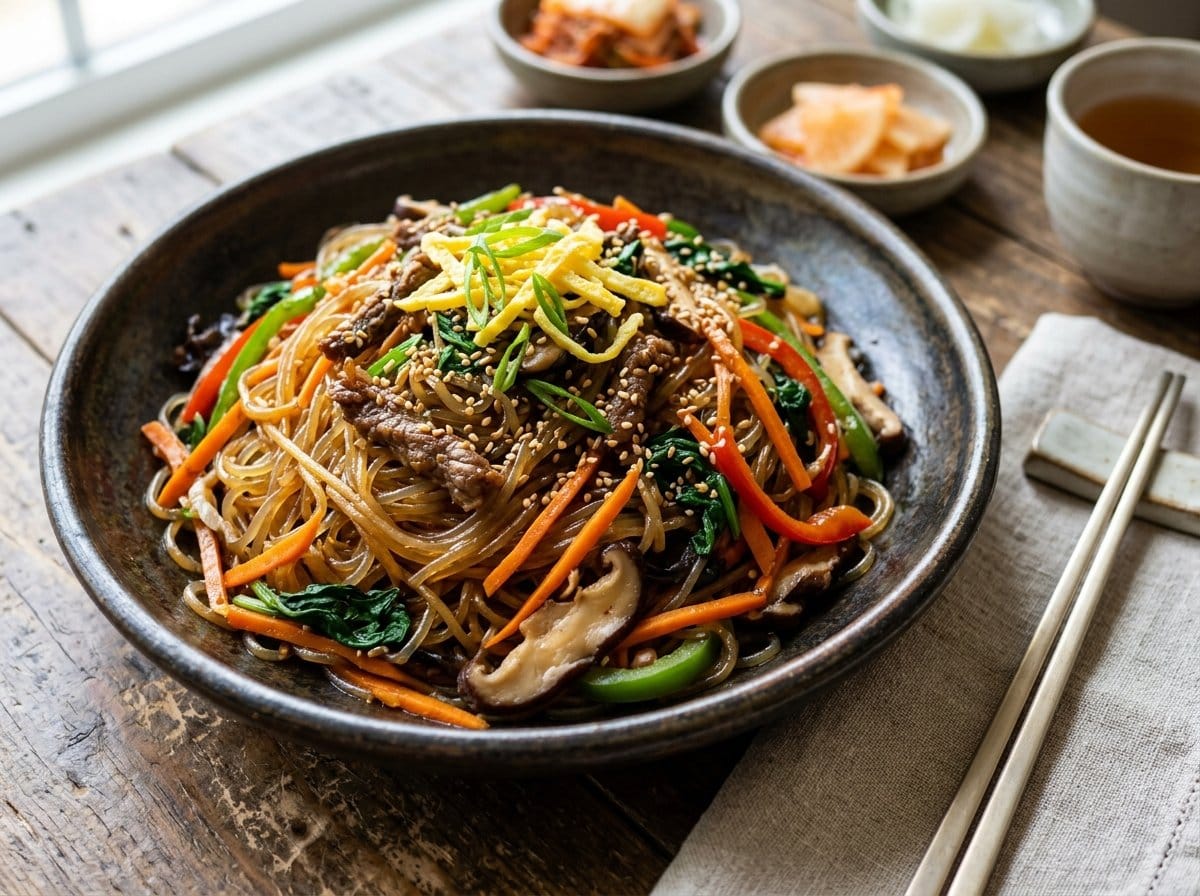
Japchae (Korean Glass Noodles)
Korean sweet potato noodles tossed with beef, spinach, mushrooms and colorful vegetables in a savory sesame-soy sauce for a festive meal.
By TastyTrails Kitchen · Published · Updated
Jump to RecipeJapchae is a Korean noodle dish made with chewy sweet potato glass noodles, thinly sliced beef, mushrooms, spinach and crisp vegetables. Each component is cooked separately, then tossed together so the colors stay distinct and the noodles absorb the savory sauce without turning soggy.
This version follows that traditional approach and includes a fine egg garnish and toasted sesame seeds. Soak the noodles while preparing the vegetables, and slice everything before cooking; the quick stir-frying goes smoothly when each ingredient is ready at the stove.
Ingredients
- 8 ounces (225 g) dried Korean sweet potato glass noodles (dangmyeon)
- 8 ounces (225 g) beef sirloin, thinly sliced across the grain
- 2 tbsp (30 ml) soy sauce, divided
- 1 tbsp (12 g) granulated sugar, divided
- 2 tsp (10 ml) toasted sesame oil, divided
- 2 cloves garlic, finely grated or minced
- 1/4 tsp ground black pepper, divided
- 2 large eggs
- 1 tbsp (15 ml) neutral oil, divided
- 1 medium carrot, cut into matchsticks
- 1/2 medium red bell pepper, thinly sliced
- 1/2 medium green bell pepper, thinly sliced
- 4 ounces (115 g) shiitake mushrooms, stemmed and sliced
- 8 ounces (225 g) baby spinach
- 1 small yellow onion, thinly sliced
- 1 tbsp (15 ml) soy sauce
- 1 tbsp (12 g) granulated sugar
- 1 tbsp (15 ml) toasted sesame oil
- 1 tbsp (15 ml) water
- 1 tbsp (9 g) toasted sesame seeds
- 2 green onions, thinly sliced on the bias
Instructions
- 1
Soak the glass noodles in plenty of cool water for 30 minutes, until flexible but still firm. Drain well while you prepare the remaining ingredients.
- 2
In a bowl, combine the beef with 1 tbsp (15 ml) soy sauce, 1 tsp (4 g) sugar, 1 tsp (5 ml) sesame oil, the garlic and 1/8 tsp pepper. Set aside for 10 minutes, until lightly seasoned.
- 3
Whisk the eggs with a pinch of salt. Heat a large nonstick skillet over low heat, add 1 tsp (5 ml) neutral oil, and cook the eggs as a thin sheet for about 1 minute per side, until just set. Cool, roll, and cut into fine strips.
- 4
Bring a large pot of water to a boil over high heat. Add the spinach for 30 seconds, until wilted and bright green, then transfer it to cold water, squeeze it dry, and cut it into bite-size pieces.
- 5
Return the water to a boil and cook the soaked noodles over medium-high heat for 5 to 6 minutes, until translucent and chewy. Drain, rinse briefly under cold water, and cut into shorter lengths with kitchen shears.
- 6
Heat 1 tsp (5 ml) neutral oil in a large skillet over medium-high heat. Stir-fry the carrot, bell peppers, mushrooms and onion separately or in batches for 2 to 3 minutes each, until just tender and still colorful; transfer each to a large bowl.
- 7
Add the marinated beef to the hot skillet over medium-high heat and stir-fry for 2 to 3 minutes, until browned and cooked through. Add it to the bowl with the vegetables and spinach.
- 8
Combine 1 tbsp (15 ml) soy sauce, 1 tbsp (12 g) sugar, 1 tbsp (15 ml) sesame oil, the water and remaining 1/8 tsp pepper. Add the noodles and sauce to the skillet over medium heat and toss for 2 minutes, until glossy and warmed through.
- 9
Return the vegetables, spinach and beef to the skillet and toss over medium heat for 1 to 2 minutes, until evenly coated. Fold in the egg strips, then finish with sesame seeds and green onions.
Tips for the Best Japchae (Korean Glass Noodles)
- Slice the beef partially frozen for thin, even pieces that stay tender.
- Cook the vegetables separately rather than crowding the skillet; this keeps them crisp and prevents excess water.
- Do not overcook the noodles. They should be chewy before they are tossed with the sauce, where they soften slightly.
- For a vegetarian version, replace the beef with extra shiitake mushrooms or firm tofu and use a vegetarian mushroom-based soy sauce.
- Japchae can be served warm or at room temperature. If making it ahead, reserve a little sauce and toss it in while reheating.
Storage and Reheating
Refrigerate japchae in an airtight container for up to 4 days. Freeze for up to 1 month, although the vegetables will soften slightly. Reheat in a skillet over medium heat with 1 to 2 tbsp (15 to 30 ml) water, tossing until hot; add a small splash of sesame oil if needed.
Frequently Asked Questions
What noodles are used for japchae?
Traditional japchae uses dangmyeon, Korean sweet potato starch glass noodles. They are thicker and chewier than ordinary rice vermicelli and are widely available in Asian grocery stores.
Can japchae be made ahead?
Yes. Prepare it up to 4 days ahead and refrigerate it. Reheat gently in a skillet with a little water, since the noodles firm up when chilled.
Is japchae served hot or cold?
Japchae is commonly served warm or at room temperature. It is also suitable for lunch boxes and buffet-style meals.
Why are my japchae noodles sticky?
They can become sticky when overcooked or left undressed after draining. Cook them until chewy, rinse briefly, drain thoroughly, and toss them promptly with the sauce.
Quick Info
Prep Time
30 min
Cook Time
30 min
Servings
4
Difficulty
Medium
Nutrition Facts
Per serving (estimated)