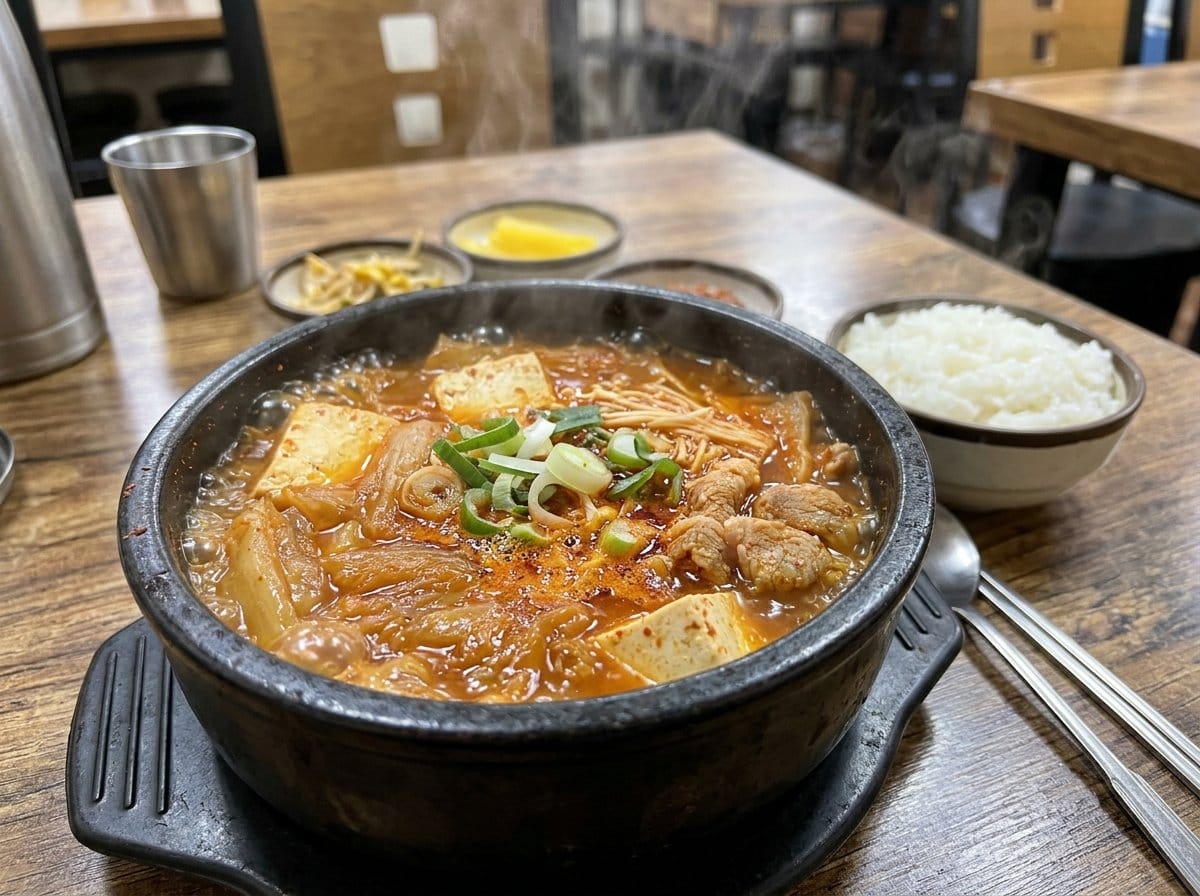
Pork Kimchi Jjigae
A bubbling Korean stew of kimchi, pork, tofu, and scallions in a savory, spicy broth—comforting with rice on cold days.
By TastyTrails Kitchen · Published · Updated
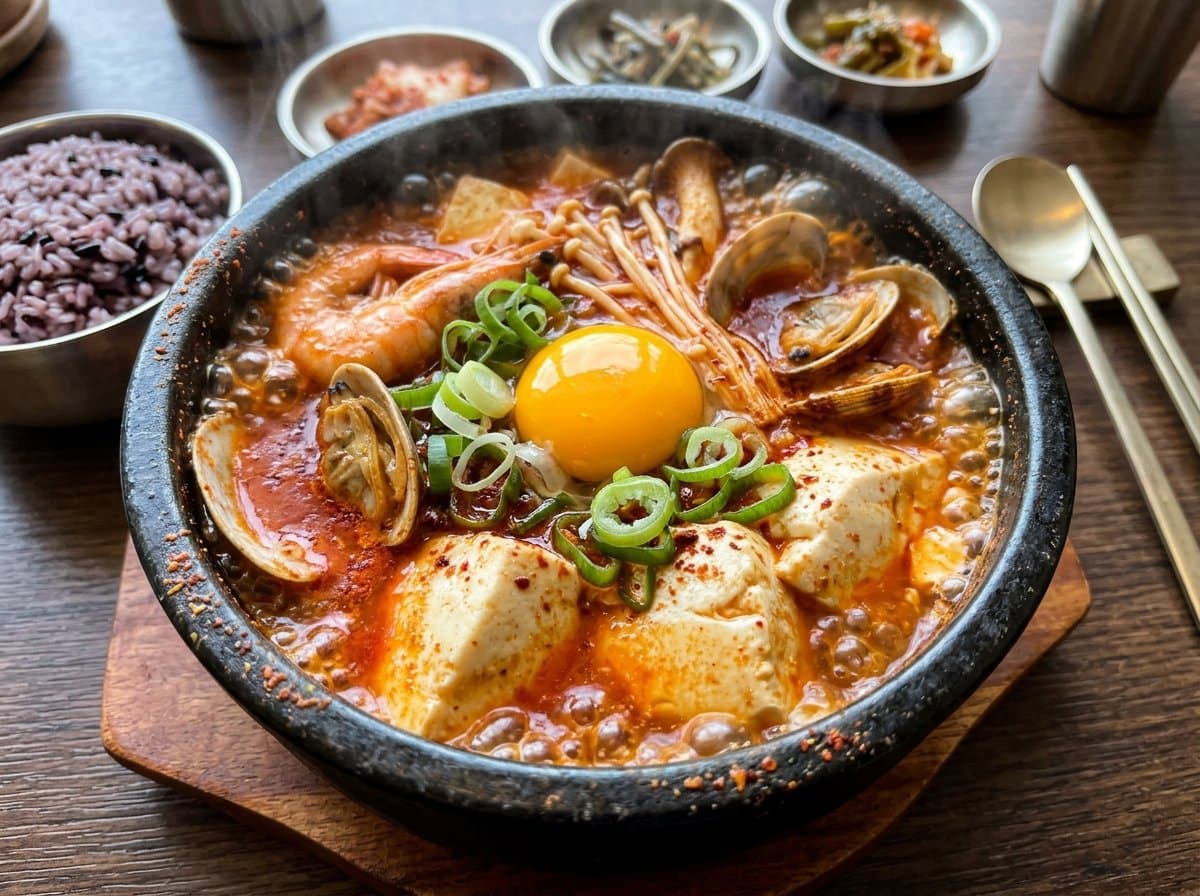
Jump to RecipeKimchi jjigae is a classic Korean stew made by simmering well-fermented kimchi with pork, tofu, and aromatics. Its broth should be spicy, tangy, and deeply savory, with tender pork and soft vegetables in every spoonful.
This version starts with pork and kimchi so their flavors build before stock is added. Use older, sour kimchi for the fullest flavor, and adjust the final seasoning with kimchi juice, salt, or a little sugar rather than relying only on gochujang.
Ingredients
- 1 lb (450 g) boneless pork shoulder, thinly sliced
- 1 tbsp (15 ml) toasted sesame oil
- 1 medium yellow onion, thinly sliced
- 3 cups (450 g) well-fermented napa kimchi, cut into bite-size pieces
- 2 tbsp (30 ml) kimchi juice
- 2 garlic cloves, minced
- 1 tsp (2 g) Korean red pepper flakes (gochugaru)
- 4 cups (960 ml) anchovy-kelp stock or low-sodium chicken stock
- 1 tbsp (16 g) Korean red pepper paste (gochujang)
- 1 tsp (6 g) granulated sugar
- 8 oz (225 g) firm tofu, cut into 1/2-inch (1-cm) slices
- 4 oz (115 g) enoki mushrooms, root end trimmed
- 2 green onions, sliced
- 1 tsp (3 g) toasted sesame seeds, for garnish
Instructions
- 1
Heat a heavy pot or Korean earthenware pot over medium heat. Add the pork and sesame oil and cook for 3–4 minutes, stirring, until the meat is no longer pink at the edges.
- 2
Add the onion and cook over medium heat for 3 minutes, until it begins to soften. Stir in the kimchi and kimchi juice and cook for 5 minutes, until the kimchi darkens and smells savory.
- 3
Add the garlic and gochugaru and stir over medium heat for 30 seconds, just until fragrant; do not let the pepper burn.
- 4
Pour in the stock and stir in the gochujang and sugar. Raise the heat to high and bring the stew to a full boil, skimming any foam from the surface.
- 5
Reduce the heat to medium-low and simmer uncovered for 20 minutes, stirring once or twice, until the pork is tender and the broth is red and richly flavored.
- 6
Arrange the tofu and enoki mushrooms on top. Cover and simmer over medium-low heat for 5 minutes, until the tofu is hot and the mushrooms are tender.
- 7
Taste the broth and adjust with more kimchi juice for tang, gochugaru for heat, or a pinch of sugar if the kimchi is sharply sour. Finish with the green onions and sesame seeds.
- 8
Serve immediately while bubbling, with hot steamed rice on the side.
Tips for the Best Pork Kimchi Jjigae
- Use older, well-fermented kimchi rather than fresh kimchi; young kimchi will make a milder, less tangy stew.
- Pork shoulder stays juicier than very lean pork. Thinly sliced pork belly also works, but reduce the sesame oil to 1 teaspoon (5 ml).
- For a vegetarian version, replace the pork with sliced mushrooms and use kombu-mushroom or vegetable stock; do not use anchovy stock.
- If using a Korean earthenware pot, heat it gradually and place it on a wooden board or heatproof trivet when serving.
- The stew can be made one day ahead; the flavor improves overnight, though add the tofu and enoki while reheating so they do not become waterlogged.
Storage and Reheating
Cool leftovers within 2 hours and refrigerate in a sealed container for up to 3 days. Freeze the stew without tofu or enoki for up to 2 months; thaw overnight, reheat gently until steaming, and add fresh tofu and mushrooms.
Frequently Asked Questions
What kind of kimchi is best for kimchi jjigae?
Well-fermented, sour napa cabbage kimchi is best because it gives the broth its characteristic tang and depth. Fresh kimchi can be used, but add a little extra kimchi juice or rice vinegar at the end if needed.
Can I make kimchi jjigae without pork?
Yes. Use mushrooms, canned tuna, beef, or firm tofu instead. For a vegetarian stew, use vegetable or kombu-mushroom stock rather than anchovy stock.
Why is my kimchi jjigae too sour?
Stir in a small pinch of sugar at a time until the sharpness is balanced. Adding more stock and simmering briefly can also soften an aggressively sour broth.
What do you serve with kimchi jjigae?
Steamed white rice is the classic accompaniment. Simple Korean side dishes such as seasoned bean sprouts, cucumber salad, or pickled radish also work well.
Quick Info
Prep Time
15 min
Cook Time
35 min
Servings
4
Difficulty
Easy
Nutrition Facts
Per serving (estimated)