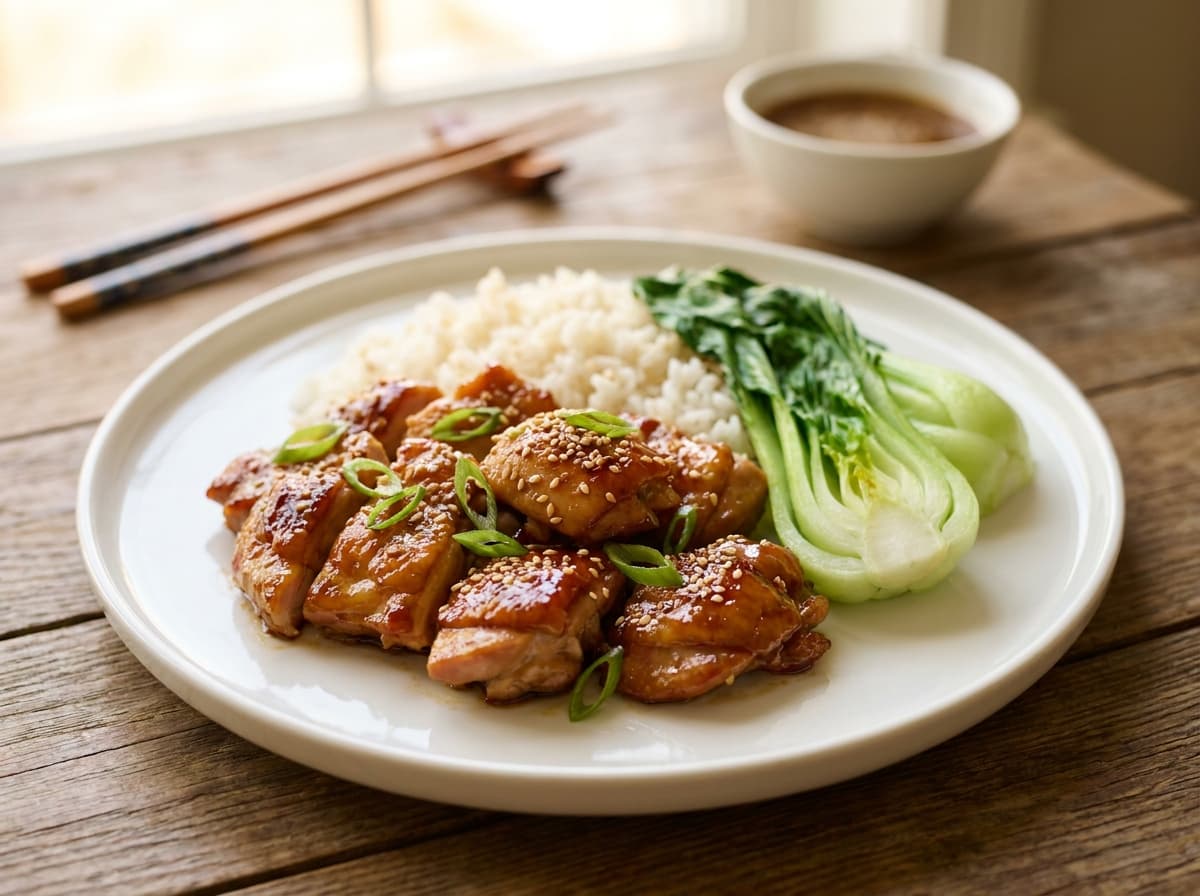
Oyakodon
Japanese chicken-and-egg rice bowls simmered with onion in a savory dashi sauce, then finished with softly set eggs for a comforting meal.
By TastyTrails Kitchen · Published · Updated
Jump to RecipeOyakodon is a classic Japanese donburi made by simmering chicken and onion in dashi, soy sauce, mirin, and sugar before covering them with softly cooked egg. The name means “parent and child,” referring to chicken and egg served together over rice.
This version keeps the traditional balance of sweet, salty, and savory flavors while using boneless chicken thighs for tenderness. Cook the eggs just until the whites are set and the yolks remain creamy; they will continue cooking slightly from the heat of the sauce and rice.
Ingredients
- 2 cups (370 g) cooked short-grain white rice, hot
- 1/2 medium yellow onion (about 4 oz/115 g), thinly sliced
- 12 oz (340 g) boneless, skinless chicken thighs, cut into 1-inch (2.5-cm) pieces
- 1 cup (240 ml) dashi
- 2 tbsp (30 ml) Japanese soy sauce
- 2 tbsp (30 ml) mirin
- 1 tbsp (12 g) granulated sugar
- 3 large eggs, lightly beaten
- 2 scallions, thinly sliced
- 4 mitsuba sprigs or cilantro leaves, for garnish
Instructions
- 1
Divide the hot rice between two deep bowls and keep them covered while the topping cooks.
- 2
Put the sliced onion, dashi, soy sauce, mirin, and sugar in a 10-inch (25-cm) skillet. Bring to a gentle simmer over medium heat and cook for 4-5 minutes, until the onion softens and the broth smells sweet and savory.
- 3
Add the chicken and spread it into a single layer. Cover and simmer over medium-low heat for 6-8 minutes, turning the pieces once, until the chicken is cooked through and no longer pink in the center.
- 4
Stir the beaten eggs briefly, then pour them evenly over the chicken and onion. Cover and cook over low heat for 1-2 minutes, until the whites are mostly set but the surface is still glossy and softly trembling.
- 5
Turn off the heat and let the skillet stand, covered, for 30-60 seconds. The eggs should be softly set rather than firm or dry.
- 6
Spoon the chicken, onion, egg, and sauce over the rice. Finish with sliced scallions and mitsuba or cilantro, and serve immediately.
Tips for the Best Oyakodon
- Use chicken thighs rather than breast for the tender texture traditional in oyakodon; cut pieces evenly so they finish together.
- Dashi gives the bowl its characteristic flavor. Use instant dashi prepared according to the package directions, or substitute unsalted chicken stock if necessary.
- Do not boil hard after adding the egg. Gentle heat keeps the curds tender and prevents the sauce from evaporating too quickly.
- For more softly runny egg, add half the egg first, cook for 45 seconds, then add the rest and cover until barely set.
- Mitsuba is traditional but can be difficult to find; cilantro or thinly sliced scallions make practical garnishes.
- The chicken-and-onion mixture can be cooked a day ahead and refrigerated, but add and cook the eggs just before serving.
Storage and Reheating
Refrigerate leftovers in an airtight container for up to 2 days. Reheat gently in a covered skillet or microwave until hot, though the egg will become firmer. Cooked rice can be frozen separately for up to 1 month; thaw and reheat until steaming.
Frequently Asked Questions
What does oyakodon mean?
Oyakodon means “parent and child” in Japanese, referring to chicken and egg served together over rice.
Can I use chicken breast for oyakodon?
Yes, but chicken thighs are more traditional and stay juicier. If using breast, cut it into small pieces and stop cooking as soon as it reaches 165°F (74°C).
What kind of rice is used for oyakodon?
Short- or medium-grain Japanese rice is traditional because its slightly sticky texture holds the saucy topping. Calrose rice is a good supermarket substitute.
Is oyakodon served hot or cold?
It is served hot, immediately after the softly set egg is spooned over the rice.
Quick Info
Prep Time
15 min
Cook Time
20 min
Servings
2
Difficulty
Easy
Nutrition Facts
Per serving (estimated)