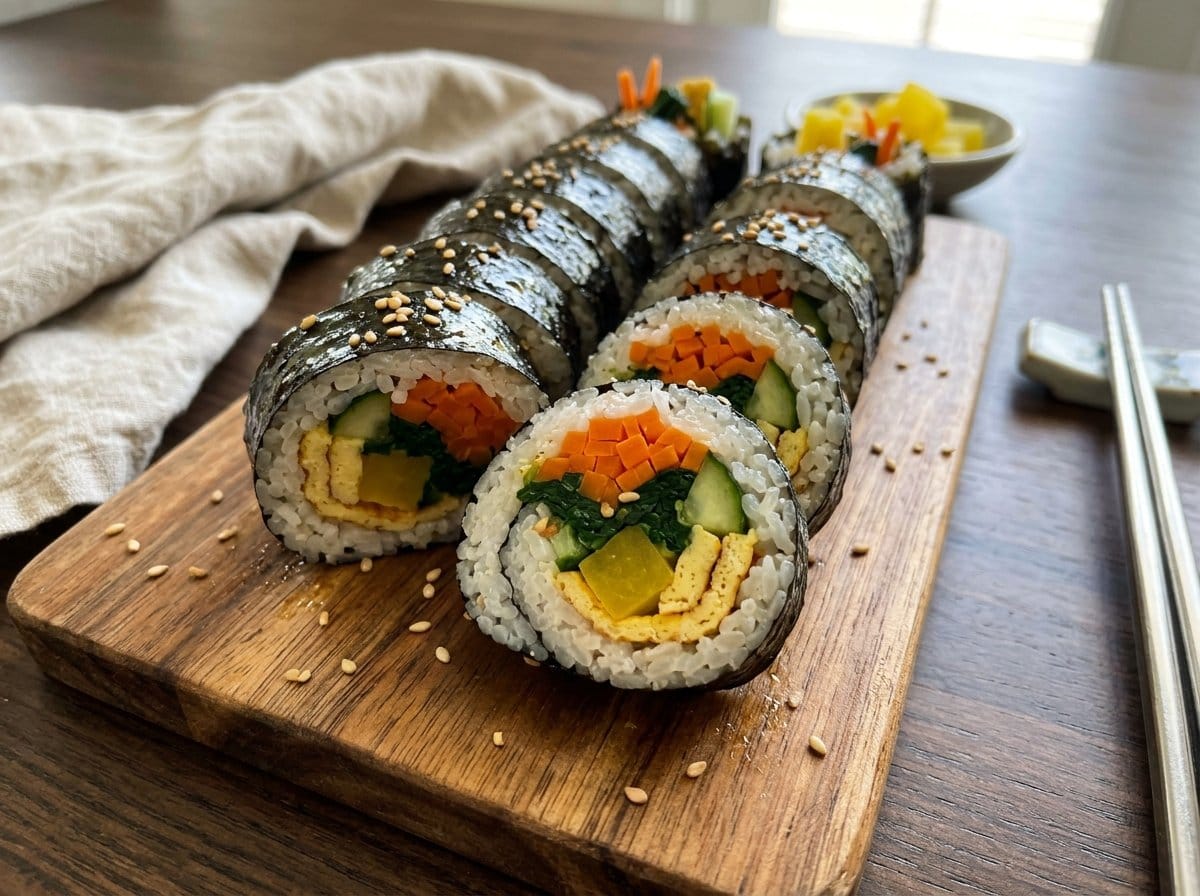
Vegetable Kimbap
Korean vegetable kimbap rolls filled with seasoned rice, spinach, carrots, cucumber, pickled radish and egg for a colorful packed lunch.
By TastyTrails Kitchen · Published · Updated
Jump to RecipeVegetable kimbap, also called yachae gimbap, is a Korean seaweed rice roll filled with neatly arranged vegetables, egg and sweet-tangy pickled radish. Unlike sushi, the rice is seasoned with sesame oil and salt rather than vinegar, and the fillings are usually cooked or seasoned before rolling.
This version uses short-grain rice for a sticky but distinct texture, quickly sautéed carrots, seasoned spinach, fresh cucumber and yellow pickled radish. Let the rice cool until warm, not hot, before spreading it over the roasted seaweed. That keeps the sheets crisp enough to roll and prevents the fillings from steaming inside.
Ingredients
- 2 cups (400 g) uncooked short-grain white rice
- 2 1/4 cups (530 ml) water
- 1 tsp (6 g) fine sea salt, divided
- 2 tbsp (30 ml) toasted sesame oil, divided
- 1 tbsp (15 ml) neutral oil, divided
- 4 large eggs
- 1 medium carrot (about 5 oz/140 g), peeled and cut into matchsticks
- 1 medium English cucumber (about 8 oz/225 g), cut into matchsticks
- 8 oz (225 g) fresh spinach
- 1 tbsp (15 ml) soy sauce
- 1 tsp (5 g) granulated sugar
- 4 sheets (about 1 oz/28 g) roasted gim (Korean dried seaweed), plus 1 extra sheet if needed
- 4 oz (115 g) yellow pickled radish (danmuji), cut into long matchsticks
- 1 tbsp (9 g) toasted sesame seeds, plus more for garnish
Instructions
- 1
Rinse the rice under cold water until the water runs mostly clear. Combine it with 2 1/4 cups (530 ml) water in a rice cooker or saucepan and cook until tender; let it stand, covered, for 10 minutes, then transfer it to a bowl.
- 2
While the rice rests, whisk the eggs with 1/4 tsp salt. Heat a nonstick skillet over low heat, add 1 tsp neutral oil, and cook the eggs as a thin omelet for 2-3 minutes per side, until set. Cool, then cut into long strips.
- 3
Blanch the spinach in a pot of boiling water over medium-high heat for 30 seconds, until wilted and bright green. Drain, rinse under cold water, squeeze very dry, and toss with 1 tsp sesame oil, the soy sauce, sugar and 1/4 tsp salt.
- 4
Heat the same skillet over medium-high heat with 1 tsp neutral oil. Stir-fry the carrot for 2-3 minutes, until slightly softened but still firm; season with 1/4 tsp salt and set aside.
- 5
Season the warm rice with the remaining 1 tbsp (15 ml) sesame oil, the remaining 1/4 tsp salt and 1 tbsp (9 g) sesame seeds. Fold gently so the grains stay intact, then cool until warm and workable, about 10 minutes.
- 6
Place one sheet of gim shiny-side down on a bamboo mat or sheet of parchment. With damp fingers, spread one-quarter of the rice in a thin layer over about three-quarters of the seaweed, leaving the far edge uncovered.
- 7
Arrange one-quarter each of the egg, carrot, cucumber, spinach and pickled radish in a horizontal line across the lower third of the rice. Lift the near edge over the filling, tighten the roll with the mat, and continue rolling firmly toward the uncovered edge.
- 8
Moisten the uncovered edge lightly with water to seal the roll. Repeat with the remaining seaweed, rice and fillings, then brush each roll lightly with sesame oil and sprinkle with sesame seeds.
- 9
Rest the rolls for 5 minutes, then slice each into 8 pieces with a sharp knife wiped clean and lightly dampened between cuts. Serve at room temperature or slightly warm.
Tips for the Best Vegetable Kimbap
- Keep the spinach very dry; excess water makes the rice soggy and causes the roll to loosen.
- Do not overcook the carrots or cucumber. The contrast between crisp vegetables and soft rice gives kimbap its characteristic texture.
- If you cannot find danmuji, use yellow pickled daikon from an Asian grocery store; it is sweeter and firmer than ordinary dill pickle.
- Spread the rice thinly and leave the far edge uncovered so the roll seals without forcing rice out of the sides.
- For make-ahead preparation, cook and cool the fillings up to 1 day ahead, but roll the kimbap close to serving time for the best seaweed texture.
- Use a sharp, damp knife for clean slices. If the rice sticks, wipe the blade rather than pressing harder.
Storage and Reheating
Kimbap is best the day it is made. Refrigerate leftovers in an airtight container for up to 24 hours, although the rice will firm up and the seaweed will soften. Reheat individual pieces gently in a covered skillet or microwave until just warm; do not freeze, as the cucumber and rice texture suffer.
Frequently Asked Questions
What is the difference between kimbap and sushi?
Kimbap rice is seasoned with sesame oil and salt, while sushi rice is seasoned with rice vinegar, sugar and salt. Kimbap also commonly uses cooked or pickled fillings such as spinach, carrot and danmuji.
Can I make vegetable kimbap without eggs?
Yes. Omit the omelet and add sautéed mushrooms, avocado or seasoned tofu. The rolls will still have plenty of flavor and texture.
Why does my kimbap fall apart?
The rice may be too cool or the fillings may be wet, or the roll may not have been tightened as you rolled it. Use warm, sticky rice, squeeze moisture from spinach and roll firmly around a compact line of fillings.
Can kimbap be made the night before?
It can, but the seaweed softens and refrigerated rice becomes firm. For the best result, prepare the fillings ahead and assemble the rolls on the day you plan to serve them.
Quick Info
Prep Time
35 min
Cook Time
30 min
Servings
4
Difficulty
Medium
Nutrition Facts
Per serving (estimated)