Goi Cuon (Vietnamese Fresh Spring Rolls)
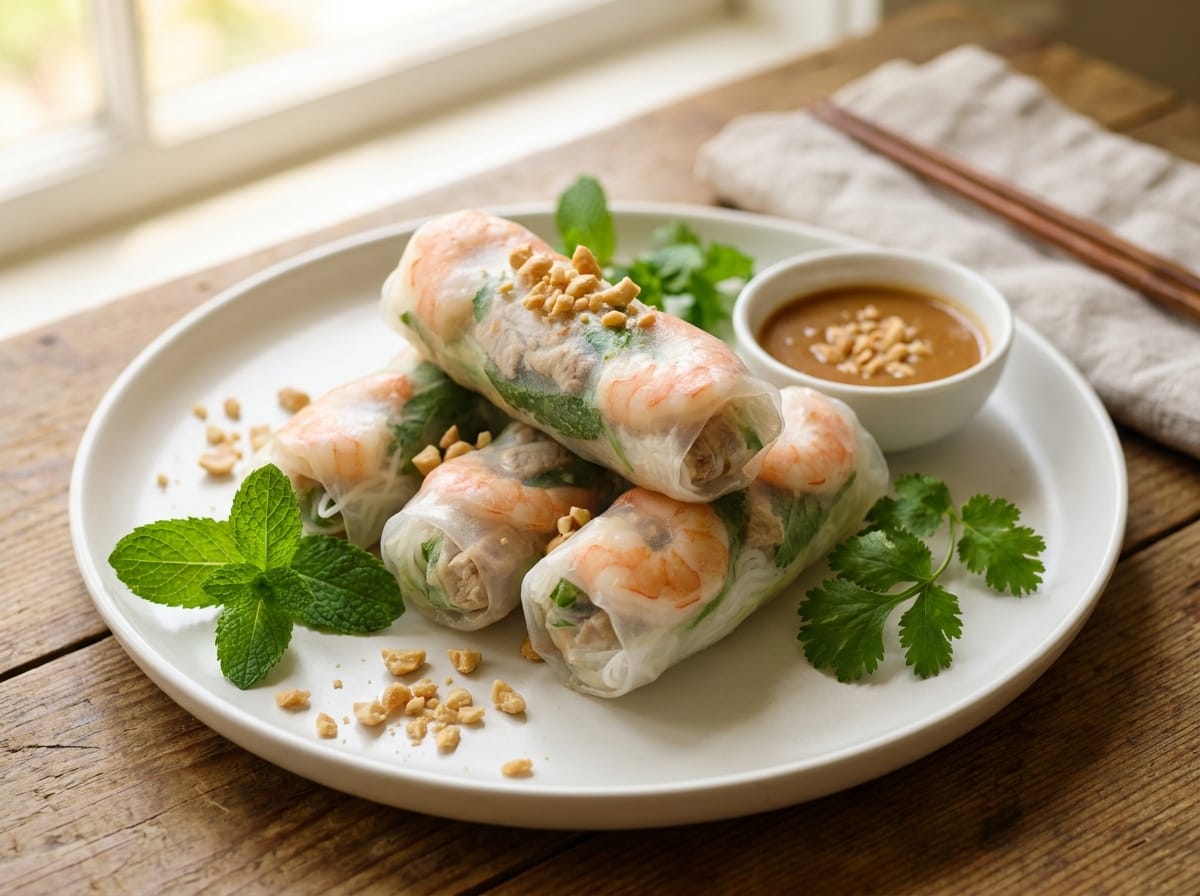
Vietnamese rice paper rolls with shrimp, vermicelli, lettuce, and herbs, served with nuoc cham. Make them for a light lunch or starter.
By TastyTrails Kitchen · Published · Updated
Jump to RecipeGoi cuon are southern Vietnamese fresh rice paper rolls, usually filled with rice vermicelli, lettuce, herbs, and shrimp, then served with a dipping sauce. Unlike fried spring rolls, they are cool, soft, and herb-forward.
This version keeps the classic shrimp-and-herb style and pairs it with a simple nuoc cham made from fish sauce, lime, sugar, garlic, and chile. The main thing that makes fresh rolls work is balance: don’t overfill them, and soften each wrapper only until flexible, since it keeps softening after it leaves the water.
Ingredients
- 4 oz (115 g) thin rice vermicelli noodles
- 2 tbsp (30 ml) fish sauce
- 2 tbsp (30 ml) fresh lime juice
- 1 tbsp (12 g) granulated sugar
- 2 tbsp (30 ml) warm water
- 1 small garlic clove, finely grated
- 1 small red chile, thinly sliced (optional)
- 8 rice paper wrappers
- 8 large cooked shrimp, peeled and halved lengthwise
- 8 small lettuce leaves or 1 cup (35 g) shredded leaf lettuce
- 1 cup (110 g) julienned carrot
- 1 cup (120 g) julienned cucumber
- 1/2 cup (10 g) fresh mint leaves
- 1/2 cup (10 g) fresh cilantro leaves and tender stems
- 1/4 cup (6 g) Thai basil leaves (or regular basil)
- Warm water, as needed, for softening the wrappers
Instructions
- 1
Bring a small saucepan of water to a boil over high heat. Add the vermicelli and cook until just tender, 3-4 minutes or according to the package directions, then drain, rinse under cold water, and let drain well until no longer watery.
- 2
Make the nuoc cham in a small bowl by stirring together the fish sauce, lime juice, sugar, warm water, garlic, and chile if using. Stir until the sugar dissolves; it should taste salty, tart, and lightly sweet.
- 3
Set up a rolling station with the rice paper wrappers, shrimp, lettuce, noodles, carrot, cucumber, mint, cilantro, and basil. Fill a wide shallow dish with warm water for dipping the wrappers.
- 4
Dip 1 rice paper wrapper in the warm water for 5-10 seconds, just until flexible but still slightly firm in the center. Lay it on a damp cutting board or clean kitchen towel; it will continue softening within a few seconds.
- 5
Place a piece of lettuce across the lower third of the wrapper, then add a small bundle of vermicelli, carrot, cucumber, mint, cilantro, and basil. Arrange 2 shrimp halves cut side up just above the vegetables so the pink side shows through the finished roll.
- 6
Fold the bottom of the wrapper up over the filling, fold in the sides, and roll tightly into a cylinder. The finished roll should feel snug and compact, with the wrapper smooth rather than wrinkled or torn.
- 7
Repeat with the remaining wrappers and filling, keeping the finished rolls under a barely damp towel so they do not dry out. If a wrapper tears badly, start again with a new wrapper rather than over-soaking a second one.
- 8
Serve right away with the nuoc cham on the side. For the best texture, eat within 1 hour, while the rice paper is still soft and the herbs are fresh.
Tips for the Best Goi Cuon (Vietnamese Fresh Spring Rolls)
- Do not soak the wrappers until fully soft in the water; they should still feel slightly firm when you lift them out, or they can turn sticky and tear on the board.
- Drain the noodles very well before rolling. Excess water makes the wrapper slippery and can dilute the filling.
- Use small amounts of filling in each roll. Overfilling is the most common reason fresh rolls split or refuse to seal.
- If your shrimp are very large, slice them a little thinner so the rolls stay compact and even.
- You can prep all the fillings and sauce several hours ahead, but roll the goi cuon close to serving time for the best texture.
- If Thai basil is hard to find, use regular basil, though the flavor will be milder and less peppery.
Storage and Reheating
Fresh spring rolls are best the day they are made. If needed, store them in a single layer, covered with a barely damp paper towel and an airtight lid, in the refrigerator for up to 1 day. Rice paper firms up and dries as it sits, so let chilled rolls stand at room temperature for 10-15 minutes before serving. The dipping sauce keeps in the refrigerator for up to 3 days.
Frequently Asked Questions
Why are my rice paper rolls tearing?
The wrappers are usually either over-soaked or overfilled. Dip each wrapper only briefly, and use a modest amount of noodles and vegetables so you can roll it tightly.
Can I make goi cuon ahead of time?
You can prepare the fillings and dipping sauce ahead, but the rolls themselves are best assembled shortly before serving. If made too far ahead, the rice paper can dry out or toughen in the refrigerator.
What dipping sauce goes with Vietnamese fresh spring rolls?
Nuoc cham is a classic choice, especially with shrimp-and-herb rolls like these. Some restaurants also serve them with a hoisin-peanut sauce, but fish sauce-lime nuoc cham is traditional and lighter.
Can I add pork to these fresh spring rolls?
Yes. Thin slices of cooked pork belly or pork loin are common in goi cuon and can be used along with the shrimp without changing the style of the dish.
Quick Info
Prep Time
25 min
Cook Time
5 min
Servings
4
Difficulty
Easy
Nutrition Facts
Per serving (estimated)