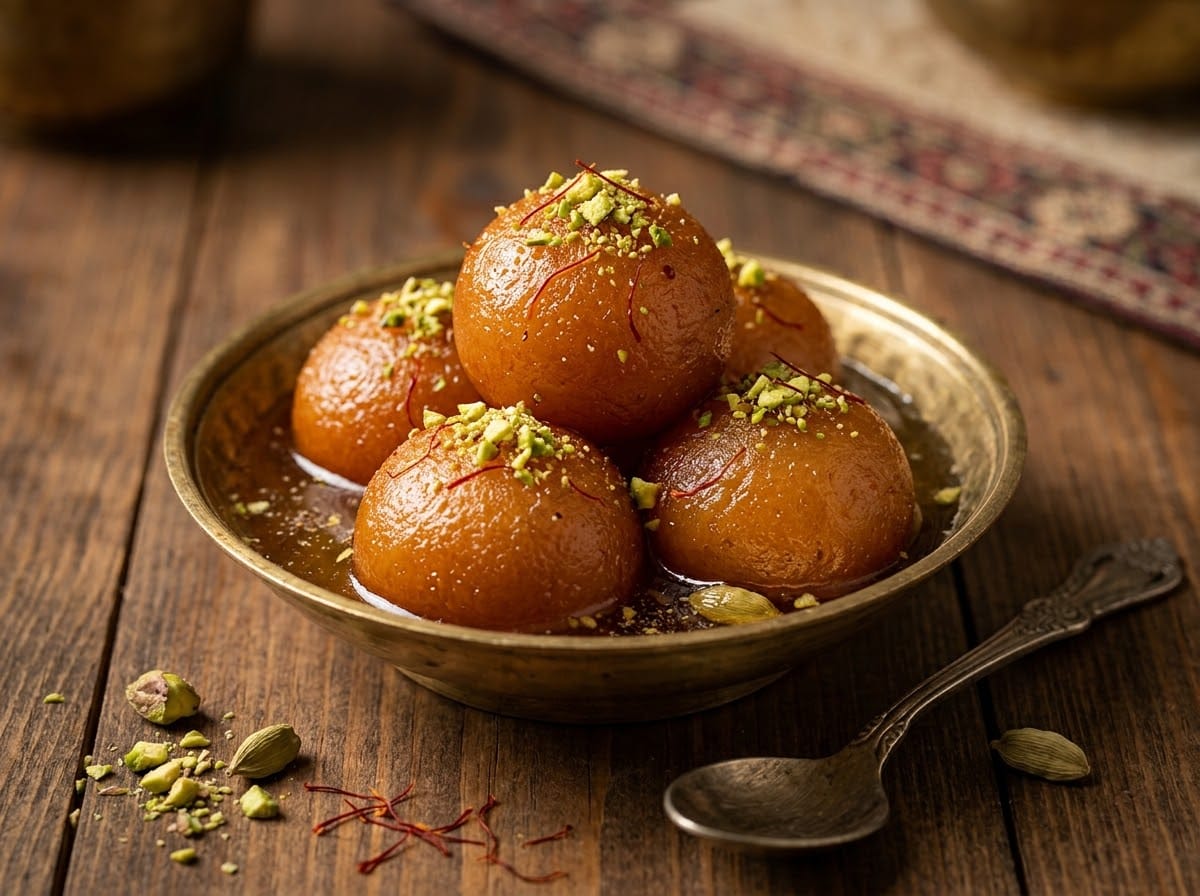
Gulab Jamun
Soft, golden gulab jamun soaked in cardamom-saffron syrup and finished with pistachios and rosewater for a classic Pakistani sweet.
By TastyTrails Kitchen · Published · Updated
Jump to RecipeGulab jamun are soft, deep-fried milk-solid dumplings soaked in fragrant sugar syrup. This Pakistani-style version has a rich, slightly chewy texture and deep amber color, with cardamom, saffron, rosewater and pistachios adding the traditional finish.
Khoya, also called mawa, gives the best flavor and texture; it is available frozen or refrigerated at South Asian grocers. Keep the dough soft but workable, and fry slowly so the centers cook before the outside becomes too dark.
Ingredients
- 1 1/2 cups (300 g) granulated sugar
- 1 1/2 cups (360 ml) water
- 6 green cardamom pods, lightly crushed
- 12 saffron threads, plus extra for garnish
- 1 tsp (5 ml) rosewater
- 8 oz (225 g) khoya or mawa, finely grated (substitute 1 1/2 cups/150 g full-fat milk powder mixed with 3 tbsp/45 ml heavy cream)
- 1/3 cup (45 g) all-purpose flour
- 1/2 tsp (2 g) baking powder
- 2 tbsp (30 ml) whole milk, plus more as needed
- 1 tbsp (15 ml) ghee, melted
- 4 cups (950 ml) neutral oil or ghee, for frying
- 2 tbsp (16 g) finely chopped pistachios, for garnish
Instructions
- 1
Combine the sugar, water, crushed cardamom and saffron in a wide saucepan over medium heat. Stir until the sugar dissolves, then simmer gently for 5 minutes, until the syrup is clear and slightly sticky but not thick; remove from the heat and stir in the rosewater.
- 2
Mix the grated khoya, flour and baking powder in a bowl until evenly combined. Rub in the melted ghee, then add the milk a little at a time until a soft, slightly tacky dough forms.
- 3
Cover the dough and let it rest at room temperature for 10 minutes. This allows the flour to hydrate and makes the dumplings less likely to crack.
- 4
Divide the dough into 12 equal portions and roll each between lightly greased palms into a smooth ball. Press out any visible cracks, since cracks can make the jamun split during frying.
- 5
Heat the oil or ghee in a deep, heavy saucepan over medium-low heat to 300°F (150°C). Test with a tiny piece of dough: it should rise slowly with small bubbles, not brown immediately.
- 6
Fry the balls in batches for 8-10 minutes, turning gently, until evenly deep golden brown and puffed. Keep the heat medium-low; high heat browns the outside before the centers cook.
- 7
Transfer the hot jamun directly into the warm syrup. Cover and let them soak for at least 30 minutes, turning once, until soft and noticeably heavier with syrup.
- 8
Serve warm or at room temperature in a shallow bowl with plenty of syrup. Scatter over the chopped pistachios and a few saffron threads to match the garnished presentation.
Tips for the Best Gulab Jamun
- Grate cold khoya finely so it blends smoothly into the dough. If it is very dry, add milk by the teaspoon rather than making the dough wet.
- Do not knead the dough vigorously; overworking makes the jamun dense and can cause a wrinkled surface.
- Fry one test ball first. If it browns in under 5 minutes, lower the heat; if it sits on the bottom, increase the heat slightly.
- Keep the syrup warm but never boiling when the fried jamun are added. Boiling syrup can toughen the outside.
- For make-ahead preparation, fry the jamun up to 1 day ahead and refrigerate them. Warm them briefly, then soak in warm syrup before serving.
- Khoya gives the most traditional result. Full-fat milk powder and cream work as a practical substitute, but the jamun will be slightly lighter and less rich.
Storage and Reheating
Refrigerate gulab jamun in their syrup in a covered container for up to 5 days. Reheat gently in a saucepan over low heat or microwave individual portions for 20-30 seconds; do not boil. They can be frozen in syrup for up to 1 month and thawed overnight in the refrigerator.
Frequently Asked Questions
Why did my gulab jamun crack while frying?
The dough was likely too dry or the balls were not rolled smooth. Add a little more milk, knead only until combined, and seal every crack before frying.
How long should gulab jamun soak in syrup?
Allow at least 30 minutes, although 1-2 hours gives a softer, more syrup-filled center. Keep the syrup warm rather than boiling.
Can I use milk powder instead of khoya for gulab jamun?
Yes. Mix full-fat milk powder with heavy cream as directed, then add milk gradually. The texture will be somewhat lighter than khoya-based gulab jamun.
Should gulab jamun be served hot or cold?
They are commonly served warm or at room temperature. Warm them gently if refrigerated, and serve with extra syrup and pistachios.
Quick Info
Prep Time
25 min
Cook Time
35 min
Servings
6
Difficulty
Medium
Nutrition Facts
Per serving (estimated)