Soft Scrambled Eggs
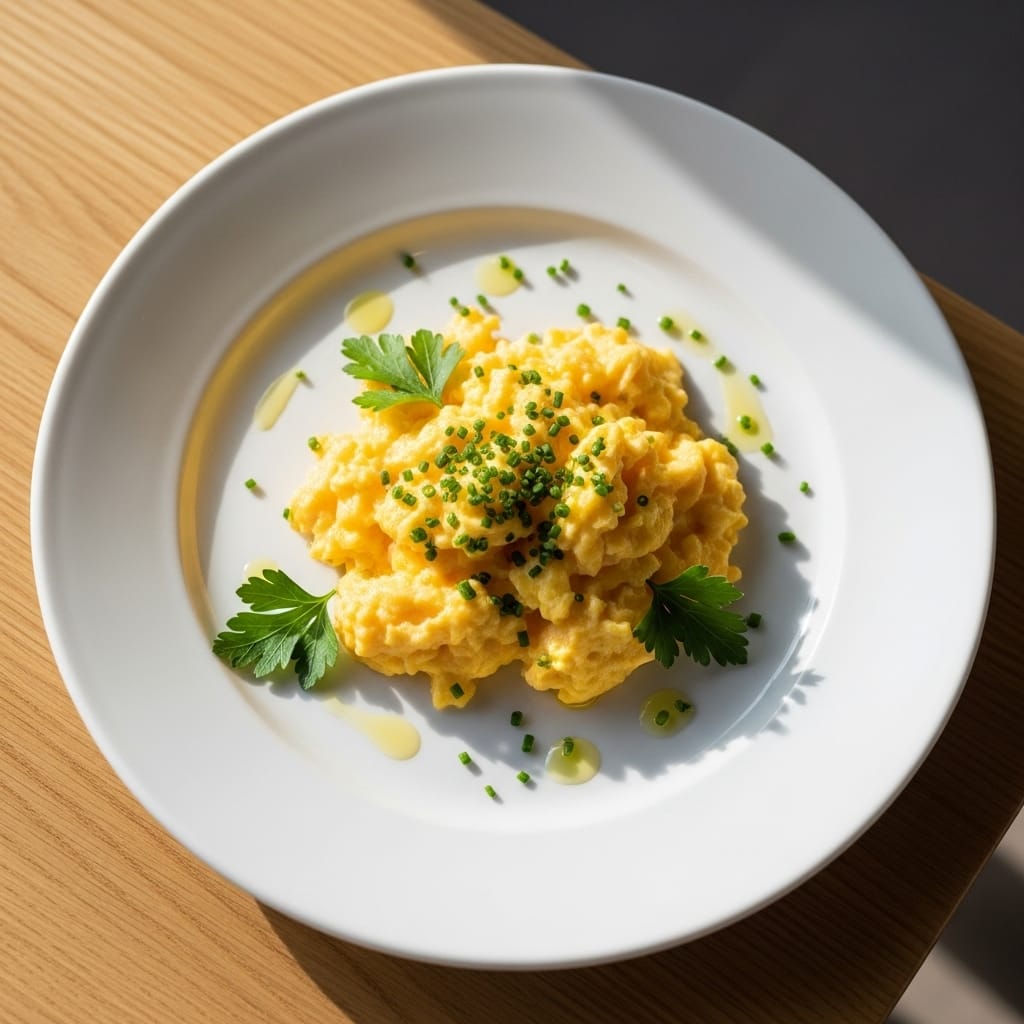
Soft scrambled eggs are gently cooked with butter for tender, creamy curds. Make them for a quick breakfast or light brunch with toast.
By TastyTrails Kitchen · Published · Updated
Jump to RecipeSoft scrambled eggs are a simple stovetop breakfast of beaten eggs cooked gently in butter until just set. This version follows the classic American home-style method: low heat, frequent stirring, and taking the pan off the stove while the eggs still look slightly glossy.
The key is moderate seasoning and careful timing, not high heat. A small spoonful of milk or cream adds a little tenderness, but the texture mostly comes from slow cooking. Serve them right away, since scrambled eggs are at their best the moment they leave the pan.
Ingredients
- 4 large eggs
- 1 tbsp (15 ml) whole milk or heavy cream
- 1/4 tsp kosher salt
- 1/8 tsp freshly ground black pepper
- 1 tbsp (14 g) unsalted butter
- 1 tbsp chopped fresh chives or parsley (optional)
Instructions
- 1
Crack the eggs into a bowl and add the milk or cream, salt, and black pepper. Whisk for 30-45 seconds, until the yolks and whites are fully blended and slightly frothy.
- 2
Set a nonstick skillet over medium-low heat and add the butter. Let it melt until it foams but does not brown, about 30 seconds.
- 3
Pour in the eggs and leave them undisturbed for 15-20 seconds, until a thin layer begins to set around the edges.
- 4
Using a silicone spatula, gently push the eggs from the edges toward the center, forming soft folds. Continue cooking over medium-low heat, stirring every few seconds so small, tender curds form.
- 5
Cook for 1-2 minutes more, until the eggs are softly set and still look slightly glossy in places. Remove the pan from the heat while they are a little looser than you want, since they will keep cooking from residual heat.
- 6
Divide between plates and garnish with the chives or parsley, if using. Serve immediately while hot and creamy.
Tips for the Best Soft Scrambled Eggs
- Keep the heat at medium-low; high heat makes scrambled eggs dry and rubbery before the curds can stay tender.
- Pull the eggs off the stove when they still look slightly wet. Carryover heat will finish them in the pan and on the plate.
- For larger curds, stir less often; for smaller, creamier curds, stir more frequently with gentle strokes.
- A nonstick skillet or well-seasoned pan makes a big difference, since softly cooked eggs can stick easily.
- You can skip the milk or cream if you prefer; the eggs will still be tender as long as they are cooked gently.
- For a richer finish, stir in 1 tsp (5 g) extra butter off the heat just before serving.
Storage and Reheating
Scrambled eggs are best eaten right after cooking, when the curds are still soft. If needed, refrigerate leftovers in an airtight container for up to 1 day. Reheat very gently in a skillet over low heat or in short microwave bursts, just until warmed through, to avoid overcooking.
Frequently Asked Questions
Should I add milk to scrambled eggs?
A small amount of milk or cream can make scrambled eggs slightly softer, but it is optional. The biggest factor in texture is cooking them gently over low heat.
Why are my scrambled eggs watery?
Watery scrambled eggs usually come from overcooking or salting too far in advance and then letting the mixture sit. Cook them just until softly set and serve right away.
What is the best pan for scrambled eggs?
A nonstick skillet is the easiest choice because the eggs release cleanly and cook evenly. A well-seasoned skillet also works if the heat is kept low.
Can I make scrambled eggs ahead?
They can be made slightly ahead, but the texture is best fresh. If you need to hold them briefly, keep them off direct heat and serve within a few minutes.
Quick Info
Prep Time
5 min
Cook Time
5 min
Servings
2
Difficulty
Easy
Nutrition Facts
Per serving (estimated)