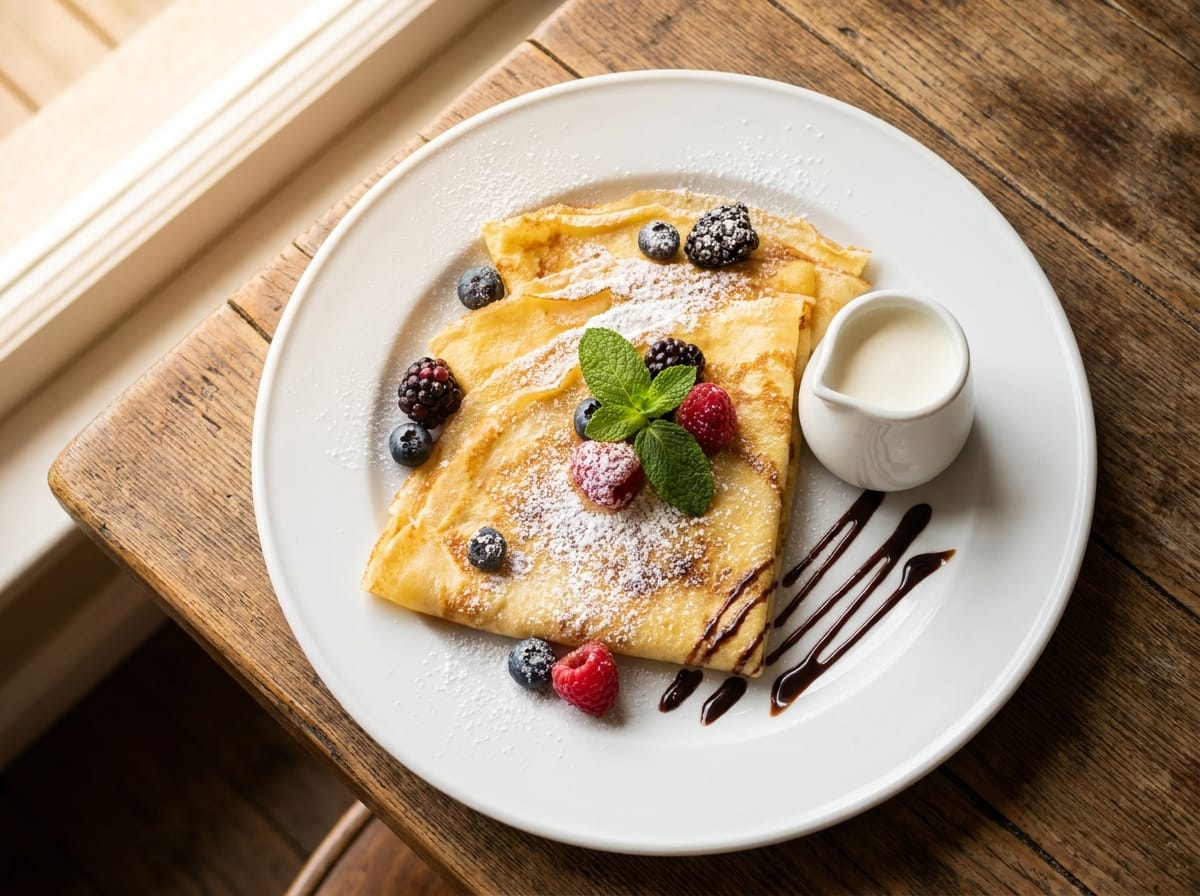
French Crêpes
Classic French crêpes are thin, tender pancakes made from a rested egg batter, ideal for brunch or dessert with sweet or savory fillings.
By TastyTrails Kitchen · Published · Updated
Jump to RecipeFrench crêpes are delicate, paper-thin pancakes from Brittany that are now made across France in both sweet and savory forms. The batter is simple, but the hallmark texture comes from getting it smooth, letting it rest, and cooking each crêpe quickly in a lightly buttered pan.
This version keeps the classic style and ratio, with enough milk for a fluid batter that spreads easily and a short rest for a more supple result. Use a 10-inch nonstick skillet or crêpe pan, and do not worry if the first crêpe is not perfect; it often helps you judge the right heat.
Ingredients
- 1 cup (120 g) all-purpose flour
- 1 tbsp (12 g) granulated sugar
- 1/4 tsp fine salt
- 2 large eggs
- 1 1/2 cups (360 ml) whole milk
- 2 tbsp (28 g) unsalted butter, melted and slightly cooled
- 1 tbsp (14 g) unsalted butter or 1 tbsp (15 ml) neutral oil, for the pan
Instructions
- 1
Whisk the flour, sugar, and salt in a medium bowl until evenly combined.
- 2
Add the eggs and about half of the milk, then whisk from the center outward until you have a thick, smooth batter with no visible lumps.
- 3
Whisk in the remaining milk and the melted butter until the batter is fluid and the consistency of heavy cream. Cover and let it rest at room temperature for 30 minutes, or refrigerate for up to 12 hours.
- 4
Heat a 10-inch nonstick skillet or crêpe pan over medium heat until the pan feels evenly hot. Lightly brush with butter or oil.
- 5
Pour in about 1/4 cup (60 ml) batter, immediately lifting and swirling the pan so the batter coats the bottom in a thin, even layer. Cook for 45 to 75 seconds, until the surface looks dry and the underside is lightly golden at the edges.
- 6
Loosen the edge with a thin spatula, then flip the crêpe and cook for 15 to 30 seconds more, until the second side is set with a few pale golden spots.
- 7
Transfer to a plate and repeat with the remaining batter, brushing the pan lightly as needed and stacking the crêpes as they finish. Adjust the heat if they brown too fast or take longer than about a minute to set.
- 8
Serve warm, or keep the stack covered with a clean towel so the crêpes stay soft and pliable for filling with sweet or savory ingredients.
Tips for the Best French Crêpes
- Resting the batter matters: it lets the flour fully hydrate and helps the crêpes cook up tender instead of slightly rubbery.
- If the batter seems too thick after resting, whisk in 1 to 2 tbsp (15 to 30 ml) milk; it should pour easily and coat the pan in a thin layer.
- Use just enough fat to lightly film the pan. Too much butter or oil will fry the batter and create uneven, lacy patches instead of smooth crêpes.
- For the smoothest batter, blend everything for 10 to 15 seconds, then rest it as directed.
- If your first crêpe tears, the pan may be too cool or the batter may be a little too thin. If it turns dark before it sets, lower the heat slightly.
- Make the batter ahead and refrigerate it overnight; whisk gently before cooking, and add a splash of milk if it has thickened.
Storage and Reheating
Cooked crêpes keep well in the refrigerator for up to 3 days, stacked with parchment or wax paper between them and wrapped tightly. They can be frozen for up to 2 months in the same way. Reheat briefly in a skillet over low heat or in the microwave under a barely damp paper towel until warm and flexible.
Frequently Asked Questions
Why do crêpe batter recipes call for resting?
Resting gives the flour time to absorb the liquid and allows air bubbles to settle. That makes the batter smoother and the crêpes more tender and less likely to tear.
Can I make French crêpes ahead of time?
Yes. You can make the batter up to 12 hours ahead, or cook the crêpes a day or two in advance and reheat them gently before serving.
Why are my crêpes thick instead of thin?
The batter is usually too thick or not enough is being swirled around the pan. Thin it with a little milk and use just enough batter to coat the pan in a very thin layer.
What is the difference between crêpes and pancakes?
Crêpes have a much thinner batter and are cooked as a delicate, almost paper-thin sheet. Pancakes use a thicker batter, often with a leavener, so they cook up fluffy.
Quick Info
Prep Time
10 min
Cook Time
20 min
Servings
4
Difficulty
Easy
Nutrition Facts
Per serving (estimated)