Pad Thai
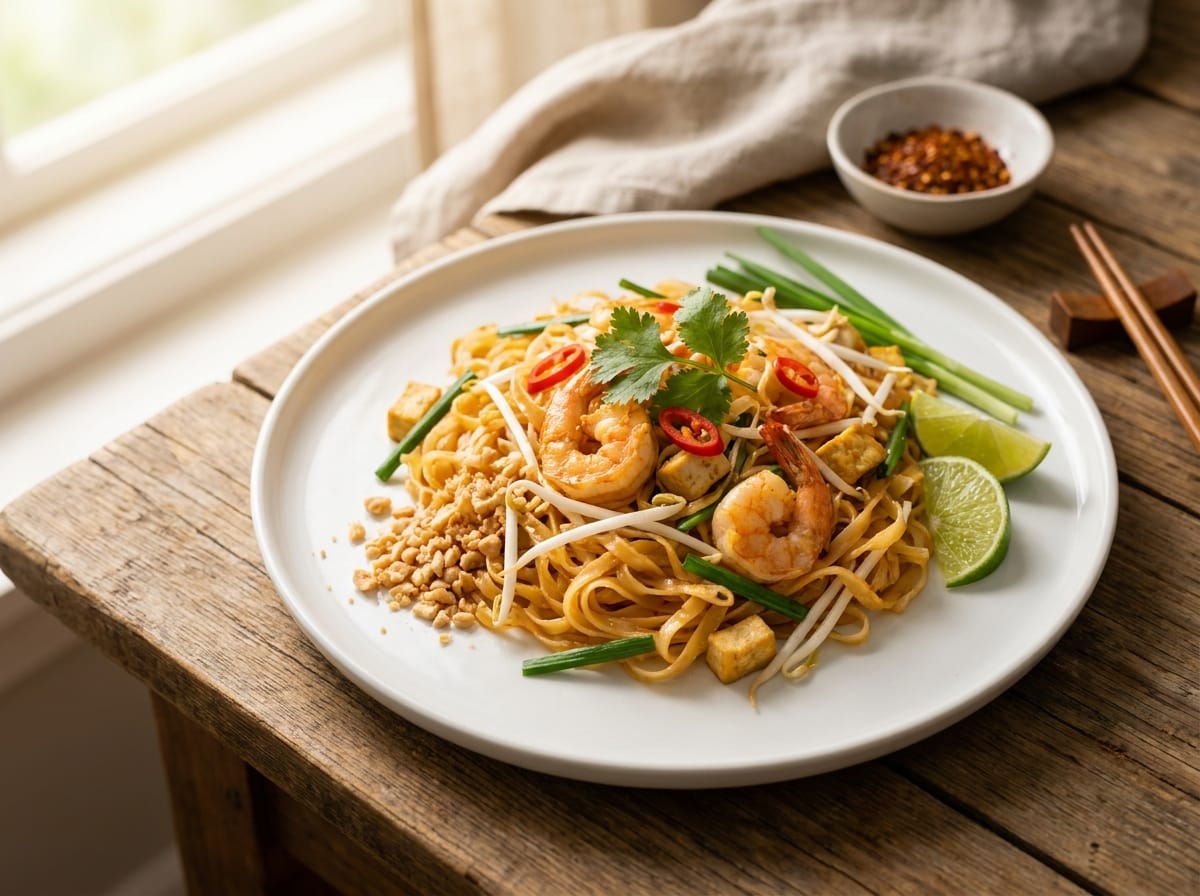
Pad Thai is a Thai stir-fried noodle dish with tamarind, fish sauce, egg, bean sprouts, and peanuts; ideal for a fast weeknight dinner.
By TastyTrails Kitchen · Published · Updated
Jump to RecipePad Thai is one of Thailand’s best-known noodle dishes: rice noodles stir-fried over high heat with a sauce built from tamarind, fish sauce, and sugar, then finished with egg, bean sprouts, and peanuts. This version keeps those core flavors and the quick wok-style method that gives the noodles their signature balance of savory, sour, and sweet.
The key is to soak the noodles until flexible, not fully soft, then finish cooking them in the pan so they absorb the sauce instead of turning mushy. Have every ingredient measured and beside the stove before you start, because the cooking moves fast.
Ingredients
- 8 oz (225 g) dried flat rice noodles
- 2 1/2 tbsp (38 ml) fish sauce
- 2 tbsp (30 ml) tamarind concentrate
- 1 1/2 tbsp (19 g) palm sugar (or light brown sugar)
- 1 tbsp (15 ml) water
- 2 tbsp (30 ml) vegetable oil
- 1 small shallot, finely sliced
- 2 cloves garlic, minced
- 2 large eggs, lightly beaten
- 2 cups (120 g) bean sprouts, divided
- 4 green onions, cut into 2-inch (5 cm) lengths
- 1/4 cup (35 g) roasted peanuts, chopped
- 2 lime wedges, for serving
Instructions
- 1
Soak the rice noodles in very warm water for 10-12 minutes, stirring once or twice, until pliable but still slightly firm in the center. Drain well and set aside.
- 2
In a small bowl, stir together the fish sauce, tamarind concentrate, palm sugar, and water until the sugar is mostly dissolved. Set the sauce near the stove.
- 3
Heat a wok or large skillet over medium-high heat until hot, then add the oil. Add the shallot and cook for 30-45 seconds until just softened, then add the garlic and stir-fry for about 15 seconds until fragrant but not browned.
- 4
Push the aromatics to one side and pour in the eggs. Scramble for 30-60 seconds over medium-high heat until softly set but still a little glossy.
- 5
Add the drained noodles and the sauce. Toss and stir-fry for 2-3 minutes, lifting and turning constantly, until the noodles are evenly coated and no longer look chalky; add 1-2 tbsp (15-30 ml) water only if the pan looks dry before the noodles are tender.
- 6
Add about three-quarters of the bean sprouts and all of the green onions. Stir-fry for 30-60 seconds until the sprouts are just wilted and the noodles are tender with a slight chew.
- 7
Transfer to plates and top with the remaining bean sprouts and the chopped peanuts. Serve right away with lime wedges for squeezing over at the table.
Tips for the Best Pad Thai
- Do not boil the noodles before stir-frying; soaking them until just flexible helps them finish cooking in the sauce without breaking apart.
- Use tamarind concentrate, not tamarind sauce, if possible. Tamarind sauce is often pre-seasoned and can make the dish too sweet or too thin.
- Pad Thai cooks very quickly, so measure the sauce, chop the garnishes, and beat the eggs before you heat the pan.
- If your pan is crowded, use the widest skillet you have and keep the heat fairly high so the noodles fry instead of steam.
- Taste before serving and adjust at the table with more lime. If you want it sweeter or saltier next time, increase the sugar or fish sauce by 1 tsp (5 ml) at a time.
- For a meatier version without changing the style too much, add 4 oz (115 g) peeled shrimp after the garlic and cook until just opaque before adding the egg.
Storage and Reheating
Pad Thai is best eaten right after cooking, when the noodles are springy and glossy. Leftovers can be refrigerated in an airtight container for up to 2 days. Reheat briefly in a skillet over medium heat with a splash of water to loosen the noodles; microwaving works, but the texture will be softer. Freezing is not recommended because the noodles turn brittle and then mushy when thawed.
Frequently Asked Questions
What noodles are used for Pad Thai?
Use dried flat rice noodles, often labeled Pad Thai noodles or rice sticks, about 1/8 to 1/4 inch wide. Very thin rice vermicelli will overcook too quickly for this dish.
Why did my Pad Thai turn mushy?
The noodles were likely soaked too long or cooked too long in the pan. Soak them only until pliable, then let them finish softening in the sauce over high heat.
Can I make Pad Thai without tamarind?
Tamarind gives Pad Thai its characteristic tang, so it is worth using if you can find it. In a pinch, the dish will still be edible with extra lime at the table, but it will not taste like classic Pad Thai.
Can I make Pad Thai ahead?
You can soak the noodles, mix the sauce, and chop the garnishes a few hours ahead. For the best texture, cook and serve the dish just before eating.
Quick Info
Prep Time
15 min
Cook Time
15 min
Servings
2
Difficulty
Medium
Nutrition Facts
Per serving (estimated)